
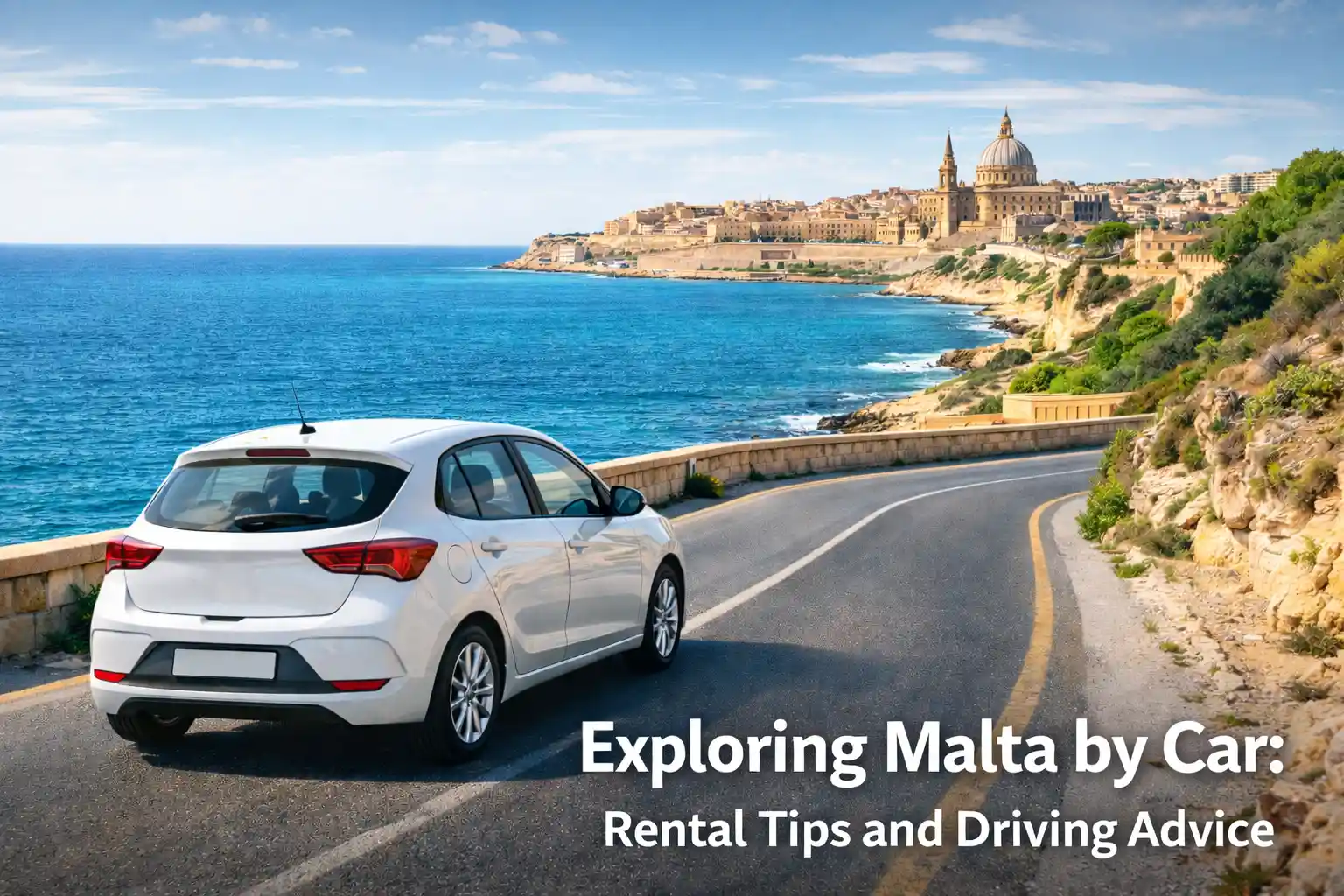
Malta is small but surprisingly tricky to get around without your own transport. Buses run infrequently on rural routes, taxis add up fast, and the best spots are often down narrow country roads that no tour bus will take you. Renting a car here is genuinely worth it, but there are a few things you need to know before you pick up the keys.
What to Expect on Maltese Roads
Malta drives on the left, like the UK. If you are coming from continental Europe, give yourself a day to adjust. Roads in Valletta and the Three Cities are extremely narrow, and parking is tight. Outside the capital, traffic moves faster but road markings can be faint or missing entirely.
Roundabouts are everywhere. Priority rules are not always obvious, so slow down and watch what locals do. Speed cameras are common on main arteries, and fines are issued to the rental company, which then charges your card.
Documents and Age Requirements
- A valid driving licence from your home country is accepted for EU citizens
- Non-EU drivers typically need an International Driving Permit alongside their national licence
- Minimum age is usually 21, though some categories require 25
- You must have held your licence for at least 1 year
Rental Costs at a Glance
| Car Category | Daily Rate (approx.) | Best For |
|---|---|---|
| Economy (Fiat 500, VW Polo) | from EUR 25 | Solo travelers, couples |
| Compact (Toyota Corolla) | from EUR 35 | Small families, 4-5 days |
| SUV / Crossover | from EUR 55 | Groups, luggage-heavy trips |
| Minivan (7-seat) | from EUR 70 | Large families or groups |
Deposit and Credit Card: What Are Your Options?
Most traditional agencies require a credit card hold of EUR 300 to EUR 1,500 at pickup. This can be a real problem if you travel with a debit card or simply want to keep your credit limit free.
The good news: some platforms now offer rentals with no deposit and no credit card requirement. You pay upfront, no hold is placed on your card, and there are no surprise charges weeks after you return the vehicle. This option is increasingly available in Malta and is worth searching for specifically when comparing offers.
For straightforward comparisons across local and international suppliers in Malta, RentCarFy.com lists options including no-deposit deals and filters by payment type, which saves a lot of time.
Practical Tips Before You Drive Off
- Photograph every scratch and dent before leaving the lot, and send them to yourself with a timestamp
- Fill up at a supermarket petrol station, they are cheaper than motorway stops
- Parking discs are required in blue zones, you can buy them at kiosks for around EUR 1
- Avoid driving into Valletta on weekday mornings unless you know where you are going
- Gozo is absolutely worth the ferry trip, but book the return crossing in advance during summer
Best Routes Worth the Drive
The coastal road from St. Julian’s to Marsaxlokk takes about 40 minutes without stops but rewards you with fishing villages, the Blue Grotto viewpoint, and the Hagar Qim temples. On Gozo, the loop from Mgarr port through Victoria, Xlendi, and Marsalforn is doable in half a day and covers the best the island has to offer.
Mdina deserves an early morning visit before tour groups arrive. You can park just outside the walls and walk in. The Silent City earns its name in the first hour after sunrise.
One Last Thing
Fuel is sold in litres and pricing is regulated by the government, so it does not vary much between stations. Petrol is cheaper than in most Western European countries. A full week of normal driving in Malta typically costs under EUR 30 in fuel for an economy car.
Plan your rental in advance if you are visiting between June and September. Supply drops and prices rise fast. Booking two or three weeks out usually gets you a noticeably better rate.
